

Perhaps you took a photo of the big exhibit. On the way home, your child is still talking about the pigeon beside the bench. You were there together, but you have brought back different bits of the day.
It can be tempting to steer them towards the thing you went to see. You want to hear what they thought of it, especially after getting everyone there. But the pigeon has stayed with them. For now, you could follow that.
If your child feels like putting something on paper, offer a sheet and crayons when you are home. There is room for one small detail, chosen by them. You do not need to turn the whole outing into a story.
One fold is enough
Start with the one-fold version of Folded Paper Book. For this outing-memory adaptation, keep just the two large panels instead of making a longer book.
Take a sheet of A4 or letter-sized paper, fold it in half once and open it again. Lay it flat with crayons suitable for your child. No cutting, stapling or extra sheets are needed. Stay alongside them, and make the fold yourself if they would rather leave that part to you.
You could ask, “Is there one bit of today you would like to put here?” Then give them time. They can use either panel, or both. The crease gives the sheet a book-like shape without leaving lots of pages waiting to be filled.
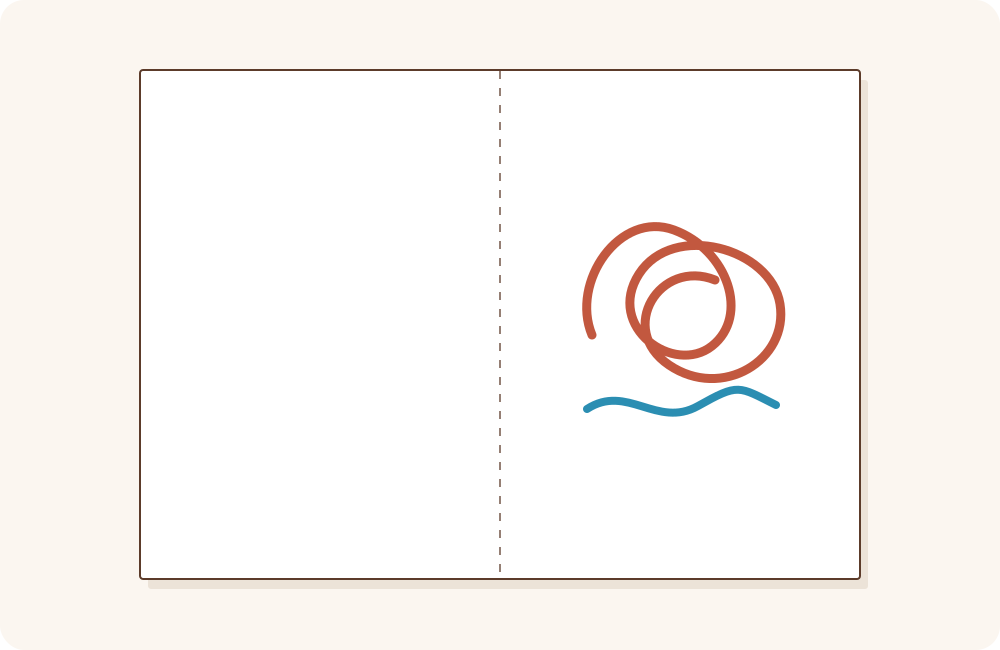
Let them decide what the marks mean
A loop of colour might be the pigeon. A line might be the bus ride home. If your child wants to tell you, listen before guessing. You can enjoy what they have chosen without making the drawing more recognisable.
If they ask you to write, put down the words they give you. A single word can sit beside a mark; a dictated sentence can stand on its own. Drawing is optional. There is no need to supply a caption while they are still deciding what to say.
You can leave the rest of the visit off the page. No list of everything you saw, no questions to check what they remember. If you are already thinking about another day out, leave room to follow their curiosity while you are there. Here, they can choose what comes back into the conversation.
The page may take a different direction entirely. Let the drawing become something else if that is where their interest goes. Or put the crayons away if they have had enough, even when the paper is still blank.
When they want to show you, look together. They might tell you something you missed beside that bench. You can add the place or date if they want it, then ask whether they would like to keep the sheet.
It can stay as it is: one fold, a few marks, and the bit of the day they chose.